

Hidden Tick-Borne Infections: How RNA FISH Testing Finds What Routine Tests Can Miss
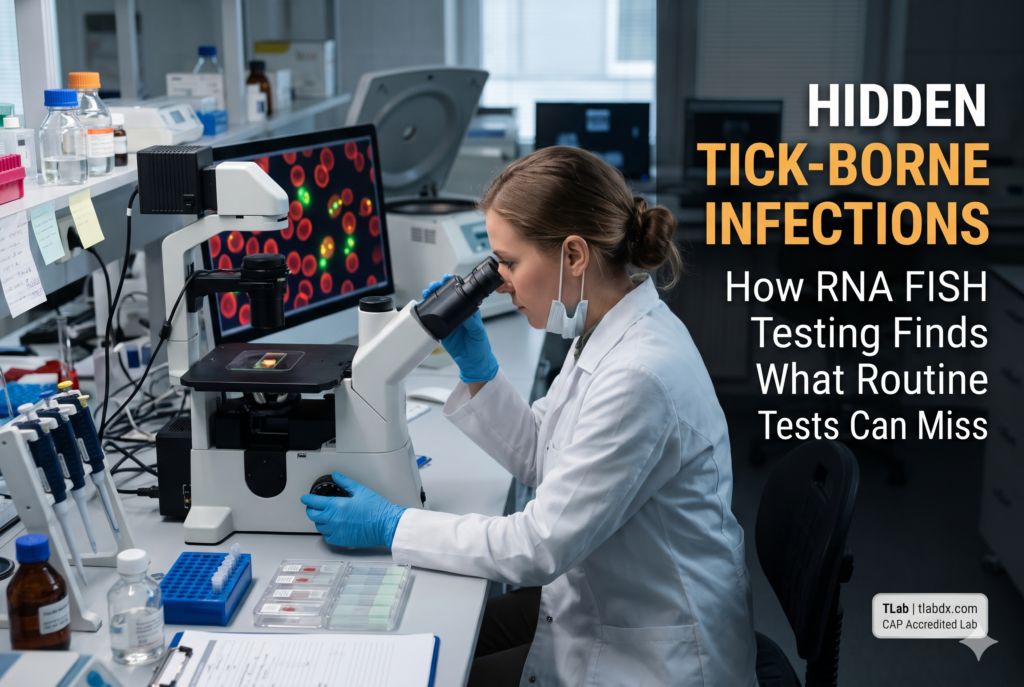
RNA FISH testing for pathogens is changing how clinicians look for hidden tick-borne infections such as Bartonella and Babesia. Instead of relying only on the body’s antibody response, this approach uses fluorescent probes and confocal imaging to look for the organism itself in a blood sample. Imagine a patient with months of exhaustion, night sweats, […]
Why Send Your Specimen to TLab Instead of a Routine Local Lab?

If you or a patient has been bitten by a tick or is experiencing symptoms of a tick-borne illness, it’s important to choose the right lab. While routine local labs do important work, tick-borne infections can be tough to detect, and standard tests often don’t give a complete picture.That’s where a reference lab for tick-borne […]
Fall Tick Season: Lyme & Babesia Risk | TLabDX

The pumpkins are out, the leaves are turning, and the summer bug spray has been pushed to the back of the garage. For many families, that feels like the end of tick season. Unfortunately, ticks did not get the memo. Autumn is one of the most overlooked windows for tick-borne exposure. Raking leaves, hiking on […]
Chronic Fatigue, Brain Fog & Hidden Infections: Why Functional Medicine Providers Turn to TLab for Tick-Borne Disease Testing

A patient walks into a functional medicine clinic with a story that’s become familiar: months, sometimes years, of constant fatigue, brain fog that makes work and talking hard, and joint or muscle pain that moves around the body. They’ve already seen two or three doctors.Every standard test came back “normal.” No one has an answer […]
Tick-Borne Disease and Mental Health: The Overlooked Neuropsychiatric Symptoms

When patients bring new anxiety, depression, panic attacks, or sudden cognitive decline to a doctor’s office, tick-borne illness is rarely the first thing anyone considers. The conversation usually starts and ends with medication or therapy referrals. Yet Lyme disease, Bartonella, and Babesia are increasingly recognized for their ability to affect the nervous system directly — […]
What to Expect During Tick-Borne Disease Testing at TLab: A Step-by-Step Patient Guide

For most patients, the hardest part of a tick-borne illness isn’t the tick bite — it’s everything that comes after. Vague symptoms, dismissive test results, and months of uncertainty leave many people wondering what a “real” diagnostic process even looks like. If you or your provider are considering tick borne disease testing tlab, this guide […]
Tick-Borne Disease Testing at TLab: A Complete Guide to Advanced Lyme, Babesia & Bartonella Diagnostics

Tick-borne illnesses such as Lyme disease, babesiosis, and bartonellosis are notoriously difficult to diagnose. Symptoms overlap with dozens of other conditions, and many patients spend months, or even years, searching for answers before they find a lab equipped to look for direct evidence of infection. This is where specialized tick borne pathogen testing at tlab […]
Functional Medicine Meets Molecular Diagnostics: A New Approach to Tick-Borne Disease Testing at TLab

Introduction For patients living with unexplained fatigue, joint pain, brain fog, and shifting inflammatory symptoms, the diagnostic journey is often long and frustrating. Standard blood panels come back “normal,” specialists disagree, and the underlying cause remains hidden. This is precisely the gap that functional medicine was built to address — and it is also the […]
When Your Nerves Are Damaged But Your Tests Come Back Normal: The Case for Confocal Nerve Injury Imaging

Confocal microscopy diagnostic services are changing how clinicians find nerve damage that standard tests miss. Neuropathy — damage to the supplemental jitters — affects an estimated 20 million Americans. It causes burning, chinking, impassiveness, and pain that can be enervating. Yet for numerous cases, the standard individual workup comes back inconclusive. Nerve conduction studies( NCS) […]
Understanding Biofilms: The Hidden Shield in Chronic Tick-Borne Infections

For numerous cases suffering from crack- borne ails like Lyme disease, Bartonella, or Babesia, the trip to recovery is long, painful, and deeply frustrating. Indeed, after standard courses of antibiotics and colourful treatments, enervating symptoms similar to habitual fatigue, severe brain fog, migrating common pain, neurological poverties, and vulnerable dysfunction frequently persist. Medical professionals constantly […]